How Customers Find Local Service Businesses Online
How Customers Find Local Service Businesses Online
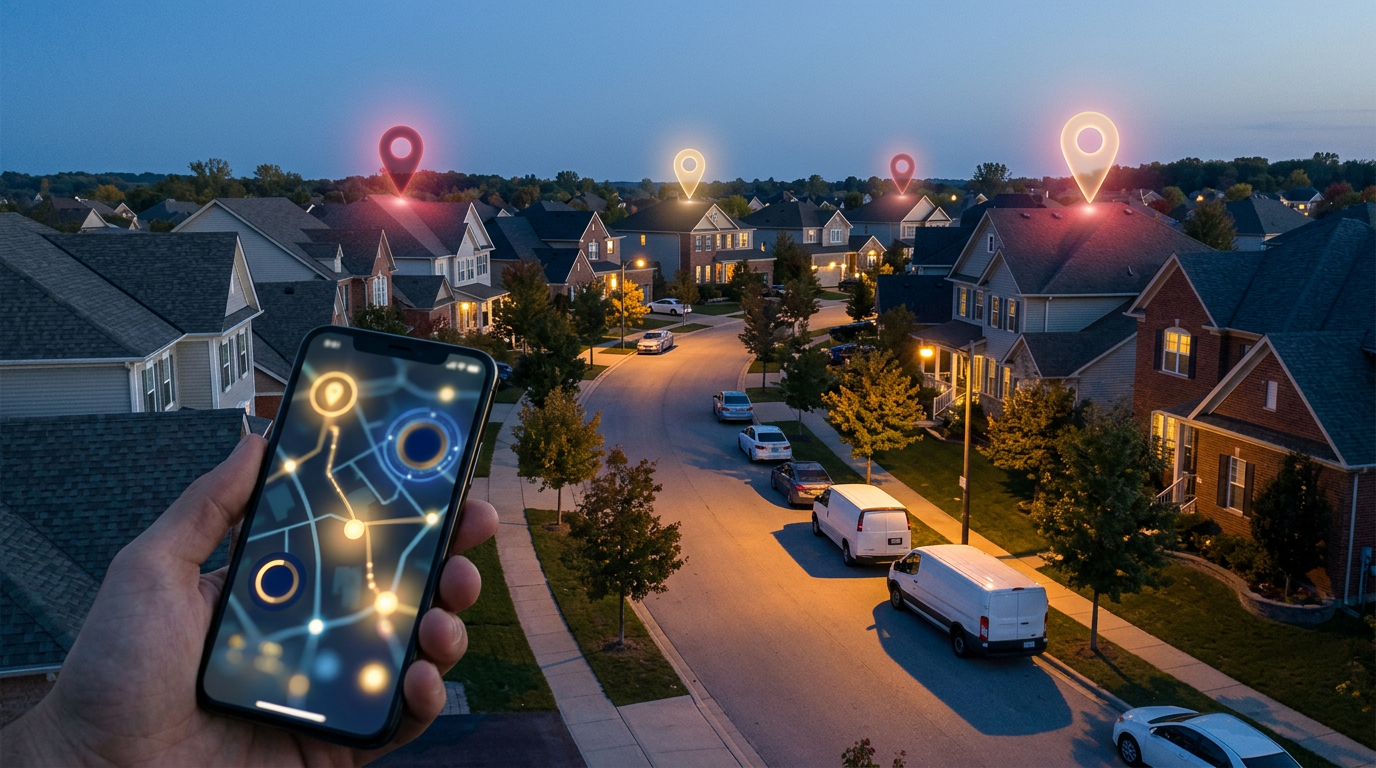
In 2026, local service business customers don't just search Google once and call. They move through a layered discovery process that includes Google Search, the map pack, AI-powered tools like ChatGPT and Perplexity, and your Google Business Profile before they ever reach your website. Consistent visibility across all of these channels is what separates businesses that generate steady inbound calls from those that get overlooked.
Key Takeaways
- Google's local map pack is driven by three signals: relevance, distance, and prominence. Your Google Business Profile feeds all three.
- AI search tools like ChatGPT and Perplexity are now part of the local discovery process, and they surface businesses with structured content and strong reputational signals.
- Reviews are a ranking factor, not just social proof. Recency matters as much as volume.
- Your website is where the decision gets made. If it loads slowly or fails to build trust on mobile, you lose customers who were already looking for you.
- Local search visibility isn't a single channel. It's a system, and gaps in any part of it give competitors an opening.
The Search Still Starts on Google
Google Search remains the dominant starting point for local service discovery. When someone's furnace stops working on a cold night, they don't scroll through social media. They open Google and type something like "HVAC repair near me" or "furnace company in Santa Rosa."
What comes back isn't a simple list of websites. Google returns a layered result: paid ads at the top, a map pack showing three local businesses with ratings and locations, and then organic results below. Each layer has its own set of ranking factors, and a business can appear in multiple places at once, or none of them.
Most clicks go to the map pack and the top few organic results. If your business isn't visible in those positions, you're effectively invisible to someone who's ready to call right now.
Google Maps and the Local Pack Are Their Own Ecosystem
The map pack deserves special attention. It's prime real estate on any local search results page, and it operates differently from standard organic rankings. Google decides who appears there based on three factors: relevance, distance, and prominence.
Relevance is whether your business matches what someone searched for. Distance is how close you are to the searcher's location. Prominence is how well-established and trusted your business appears based on reviews, citations, backlinks, and activity.
Your Google Business Profile is the primary data source for all three. A neglected profile, one with missing service descriptions, no recent reviews, and inconsistent hours, significantly reduces your chances of appearing in the map pack regardless of how good your website is.
AI-Powered Search Is Changing How Results Are Displayed
A growing number of people are now using AI tools to research local businesses. Tools like ChatGPT, Perplexity, and Google's own AI Overview summaries are increasingly showing up in the discovery process, especially for people who want more context before they pick up the phone.
Instead of clicking through several websites, someone might ask an AI tool: "What should I look for when hiring an HVAC company?" or "Which HVAC contractors in my area have the best reviews?" The AI synthesizes information from across the web and surfaces businesses that have clear, well-structured content and strong reputational signals.
What feeds AI search results is largely the same thing that feeds traditional SEO: consistent business information, structured website content, authoritative backlinks, and positive reviews. Businesses with a strong foundational presence across those signals are the ones getting surfaced.
Reviews Play a Bigger Role Than Most Owners Realize
Reviews aren't just social proof. They're a ranking signal, a trust signal, and increasingly an input for AI-generated recommendations. A business with 80 four- and five-star reviews consistently outperforms competitors with fewer or lower-rated reviews, even when other factors are relatively equal.
Recency matters too. A business that received 50 reviews two years ago and none since sends a different signal than one receiving reviews regularly today. Google interprets fresh reviews as evidence of an active, legitimate business.
For local service businesses, most reviews come from satisfied customers who simply weren't asked. A consistent follow-up process, even something as simple as a text or email after a job, can meaningfully change how a business appears across every discovery channel.
Your Website Still Has to Do Its Job
Once someone finds you through Google, the map pack, or an AI tool, they land on your website. That's where the decision gets made. A slow, outdated, or confusing website loses customers who were already looking for you.
Your website needs to clearly communicate what you do, where you do it, and how to reach you. It needs to load quickly on a phone, because most local searches happen on mobile. And it needs trust signals, things like photos, service descriptions, and visible contact options, to turn a visitor into a call.
A website that doesn't convert traffic is just an expense. One that's built to support the full customer journey from search to call is an asset.
What This Means for Your Marketing
The way customers find local service businesses in 2026 isn't complicated, but it requires consistency across multiple channels at once. Visibility in traditional search, map pack placement, a maintained Google Business Profile, structured website content, and a steady stream of reviews all work together. Neglecting any one of them creates a gap that competitors can fill.
The businesses that show up consistently across all of these touchpoints are the ones that generate steady inbound calls without chasing leads or relying on word of mouth alone. That consistency doesn't happen by accident. It comes from treating your digital presence as a system, not a checklist.
If you want to understand where your business currently stands across these channels, our team at Fitz Designz can walk you through it. We manage the full digital presence for local service businesses across Sonoma County, from website performance to local search visibility. Learn more about our SEO services and our digital marketing packages, or explore the industries we serve.
Share
You May Also Like