SEO vs PPC: Which One Does Your Small Business Actually Need?
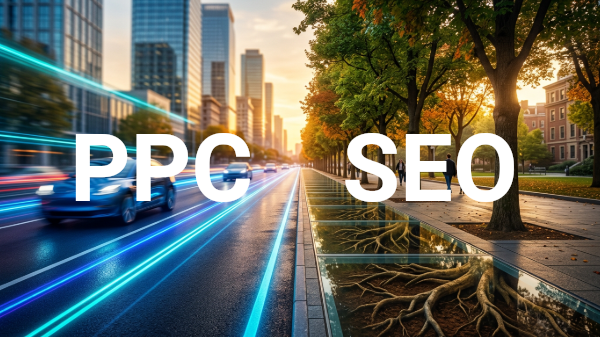
SEO vs PPC: Which One Does Your Small Business Actually Need?
SEO and PPC are probably both on your radar if you run a small business and you're trying to figure out where to put your marketing budget. Maybe someone told you SEO is a long game and you should start with ads. Maybe you've been spending on Google Ads for a year and wondering if you should be building something more permanent. The honest answer isn't about which channel is better. It's about which one your business needs right now, and how the two fit together as your marketing matures.
This isn't a platform comparison. It's a practical framework for making a smart decision based on where your business actually is. If you're not sure whether your current marketing is even working, it's worth starting with whether your digital marketing is actually generating leads before deciding where to put more budget.
SEO and PPC aren't competing strategies — they serve different functions and different timelines. Choosing between them isn't about which is better in theory. It's about where your business is right now, what your pipeline looks like, and how much runway you have to build something long-term. For most growing service businesses, the answer eventually involves both, running as one coordinated system rather than two separate budget line items.
- PPC generates leads immediately and gives you control over timing, but stops the moment you stop spending — it's a tap, not an asset.
- SEO builds organic visibility that compounds over time, but requires 3 to 6+ months before it meaningfully impacts lead flow.
- Neither channel works without a website built to convert — the site is the foundation everything else runs on.
- PPC data (which keywords and offers actually convert) directly improves SEO strategy, reducing guesswork on where to invest organic effort.
- Businesses that appear in both paid and organic results gain a credibility signal that neither channel produces on its own.
What Each Channel Actually Does
Search Engine Optimization (SEO)
SEO is the process of improving how your website and online presence show up in organic search results. For local service businesses, that includes your Google Business Profile, local map rankings, service pages, and the content that signals relevance and authority to search engines over time. A well-structured search engine optimization strategy addresses all of these layers simultaneously, not just one in isolation.
The defining characteristic of SEO is that it compounds. Every page you optimize, every link you earn, every piece of content you publish stacks on what came before. A well-executed SEO strategy builds an asset that keeps generating traffic without ongoing ad spend. The tradeoff is time. You're looking at three to six months before meaningful results appear, and twelve or more months before the investment really starts paying off at scale.
The other defining characteristic is that you own it. When you stop paying an agency to run ads, the ads stop. When you stop investing in SEO, your rankings don't disappear overnight. They hold, and in competitive markets, they become a real competitive moat.
Pay-Per-Click Advertising (PPC)
PPC, most commonly Google Search Ads, puts your business at the top of search results immediately. You bid on keywords, set a budget, and your ads show up when people search for what you offer. You pay each time someone clicks. Done well, it's one of the fastest ways to generate qualified leads for a local service business. You can read more about how we structure pay-per-click advertising campaigns for service businesses specifically.
The tradeoff is that it's a rental, not an asset. The moment you stop spending, the leads stop. There's no residual effect. And in competitive markets like HVAC, legal, or financial services, cost-per-click can be significant, which means margin management matters. PPC also rewards advertisers who understand the platform. Poor targeting, weak ad copy, or landing pages that don't convert will burn through budget without producing results.
Used correctly, PPC gives you something SEO can't: speed and control. You can turn it on for a slow month, test a new service offering, or drive leads while your organic rankings are still building.
The Real Difference Is Timing
Most of the SEO vs PPC debate misses the point because it treats the question as permanent. It isn't. The right answer depends almost entirely on where your business is in its growth cycle.
If your pipeline is empty and you need calls next month, PPC is the right answer. SEO won't help you in that window. If you're a newer business, a business that recently launched a new service, or one that went through a slow period, paid search can fill the gap while your organic presence develops.
If you're established, generating consistent leads from referrals or word of mouth, and looking to reduce your dependence on ad spend over the next one to two years, SEO is the right primary investment. You have time to let the compounding work. The goal is to build a channel you own.
Most businesses eventually land somewhere in the middle: using PPC for immediate visibility in high-value service areas while running SEO in the background to reduce cost-per-lead over time. That's not hedging. That's a system.
What Each One Can't Do
It's worth being direct about the limitations of both channels, because a lot of marketing conversations skip this part.
SEO can't generate leads on a short timeline. If you need revenue in the next 30 to 60 days, SEO is not the answer. It's also not immune to algorithm changes, and in highly competitive markets, ranking organically for the most valuable keywords takes serious ongoing investment in content, links, and technical performance.
PPC can't build anything permanent. You don't own your ad position the way you can own an organic ranking. Costs tend to increase over time in competitive markets as more advertisers enter the auction. And PPC performance is heavily dependent on what happens after the click. If your landing page is slow, unclear, or doesn't have a compelling reason to call, you'll pay for traffic that doesn't convert.
Neither channel works well without a website built to convert. A well-run PPC campaign sending traffic to a dated, slow, or confusing website is money wasted. Strong SEO that drives visitors to a site with no clear call to action doesn't produce leads either. The website is the foundation. If you want to understand how local search performance ties into the broader picture, our breakdown of the 2026 local SEO framework covers exactly that.
How SEO and PPC Work Together as a System
The businesses that generate the most consistent lead flow aren't choosing between SEO and PPC. They're running both as part of an integrated marketing system where each channel supports the other.
PPC data is incredibly useful for SEO. Running paid campaigns tells you which keywords actually convert, which offers resonate, and which service areas drive the most valuable leads. That intelligence informs your content strategy and where to focus your organic effort. You stop guessing what to rank for because the data already told you.
SEO reduces your long-term dependence on paid traffic. As your organic rankings build, you can shift budget away from keywords you're already ranking for and concentrate ad spend on competitive terms where you haven't yet earned organic visibility. The cost-per-lead from organic traffic drops over time, which improves overall marketing ROI even if you're still running ads.
When a prospect searches for your service and sees you in both the paid results and the organic listings, there's a credibility signal that neither channel produces alone. You look established. You look like the category leader, even if you're a small operation. That perception matters in high-consideration service categories where trust is part of the decision.
At Fitz Designz, we manage both channels together as part of a full-service digital marketing system, which means the strategy behind your SEO and the targeting in your ad campaigns are aligned and informed by the same performance data. There's no hand-off between a web team, an SEO company, and an ad vendor. One team sees the full picture.
Where to Start if You're Not Sure
Ask yourself two questions. First: do you need leads in the next 60 days? If yes, start with PPC while laying the groundwork for SEO simultaneously. Second: are you willing to invest consistently over 12 or more months to build an organic channel you own? If yes, SEO should be part of your plan from the beginning, even if it's not your primary driver yet.
Most service businesses in competitive local markets benefit from a phased approach. PPC gets the phone ringing while the SEO foundation is being built. As organic rankings develop, the paid budget can be adjusted to focus on the areas where it's needed most. The system becomes more efficient over time, not more expensive.
If you're not sure which mix makes sense for your business right now, that's the right starting question. The answer depends on your market, your timeline, and your current website. Those are the variables worth looking at before committing budget to either channel. Contact Fitz Designz today to learn more about how SEO and PPC can help your business.
Share
You May Also Like